
Tire Centre
Tire Centre

Tire Care & Maintenance

Tire Pressure
Maintaining optimum tire pressure helps to keep your vehicle running smoothly and safely. Properly inflated tires can:
- Prevent excessive tread wear and extend the life of your tires
- Enhance handling, traction, and the stopping ability of your vehicle
- Improve fuel economy by reducing friction, and in turn, lower emissions
Some Toyota vehicles are equipped with a Tire Pressure Monitoring System that can alert you to the need to stop and check your tire

Tire Rotation
Front tires generally wear faster than rear tires, which makes tire rotation an important part of regular tire care.
- Ensures more even wear
- Extends the life of your tires
- Improves braking and handling performance
Tires should be rotated as recommended by your Toyota vehicle maintenance schedule.

Tread Wear
As you drive, tire tread gradually wears away, which impacts both traction and braking time.
A simple way to check your tire tread is to insert a quarter into one of the grooves. If you can see the tip of the caribou’s nose, then you many need new tires.
Your Toyota Technician can check and record tire tread depth, and examine tires for damage or wear to better determine if new tires are needed.

Tire Storage
Many Toyota dealers offer the convenience of storage for your winter and summer tires — so that your tires are right at hand when tire changeover season begins.
Understanding Tire Sizes
Your Toyota tire size was carefully selected, considering factors like performance, safety, and fuel efficiency. Toyota recommends that you stick with the original equipment tire fitment when purchasing and installing winter or replacement tires.
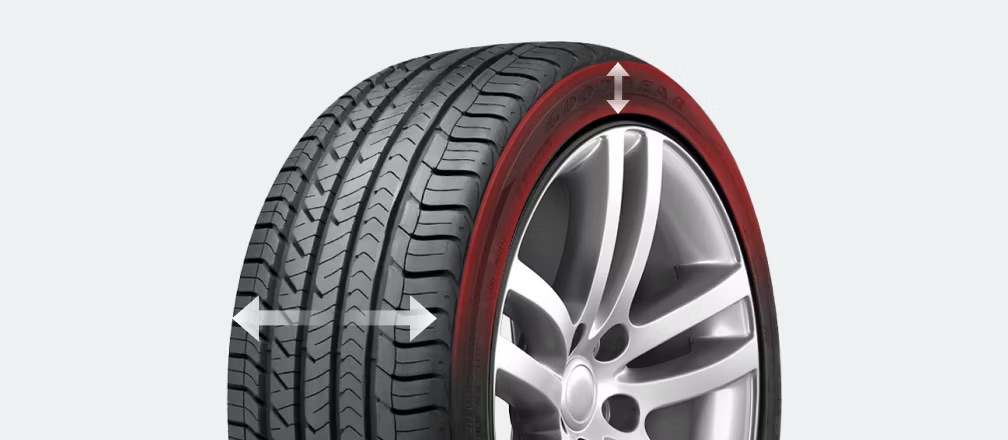
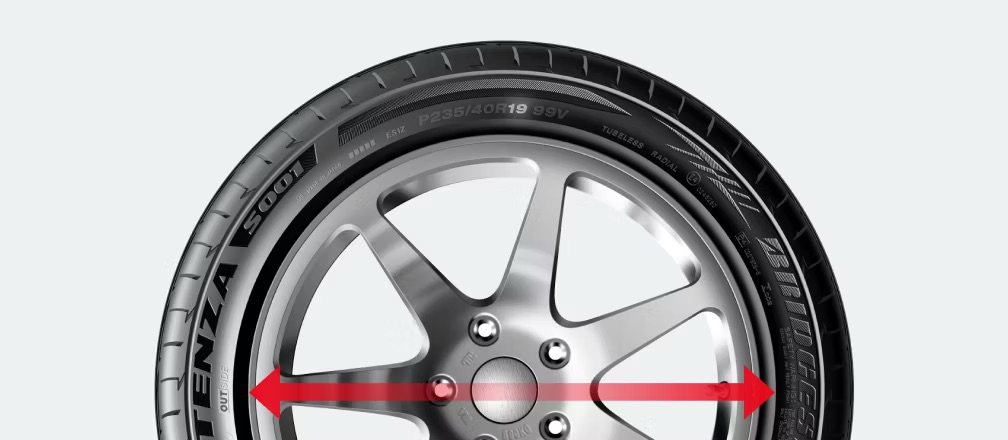
235
The width of your tire, from sidewall to sidewall, in millimetres. This determines the width of the rim that your tires are mounted on.
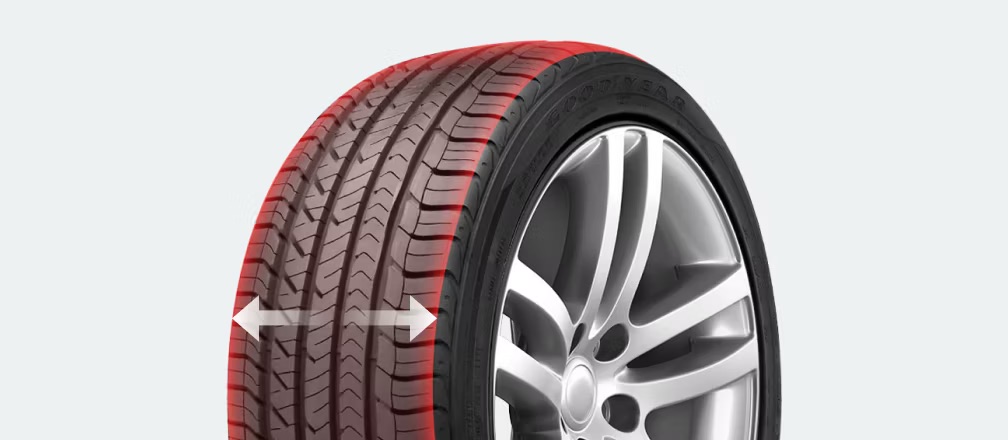
40
The aspect ratio of the tire, or the height of the sidewall, as a percentage of the width. The lower the number, the stiffer the sidewall.
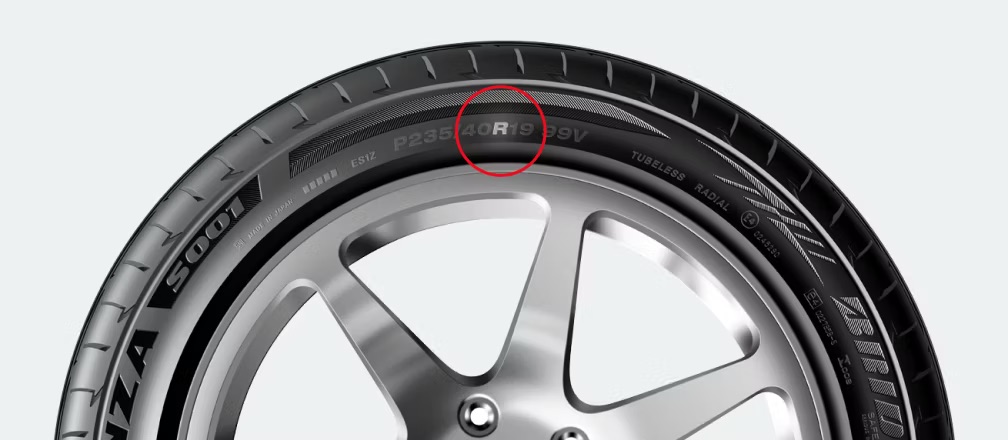
R
This indicates that the tire is a Radial tire, constructed for strength and reinforcement as well as fuel efficiency.
19
This is the diameter of the tire, which determines the size of the steel or alloy wheel that the tire must be mounted on.
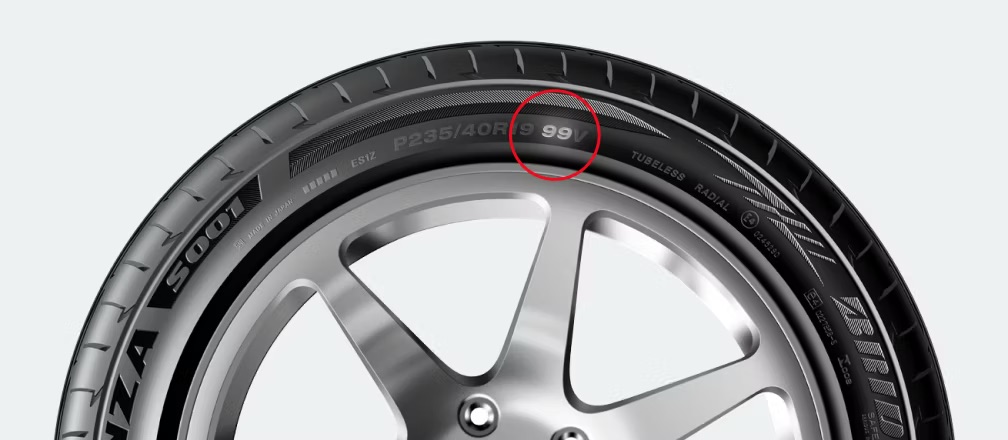
99
After the size is the load index. This indicates how much weight the tire can support at maximum air pressure. Higher numbers are for heavier vehicles.
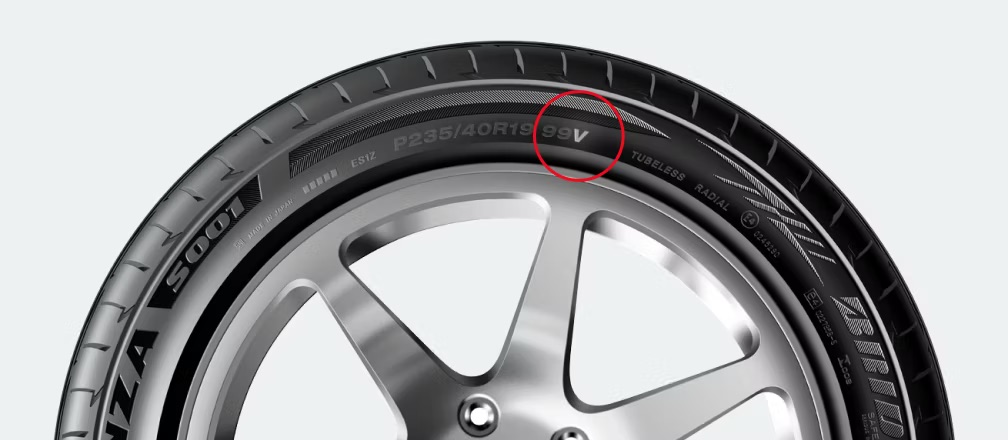
V
The Speed Rating indicator is matched to the maximum speed of the vehicle. Examples include: S-180km/h, T-190km/h, H-210km/h, V-240km/h
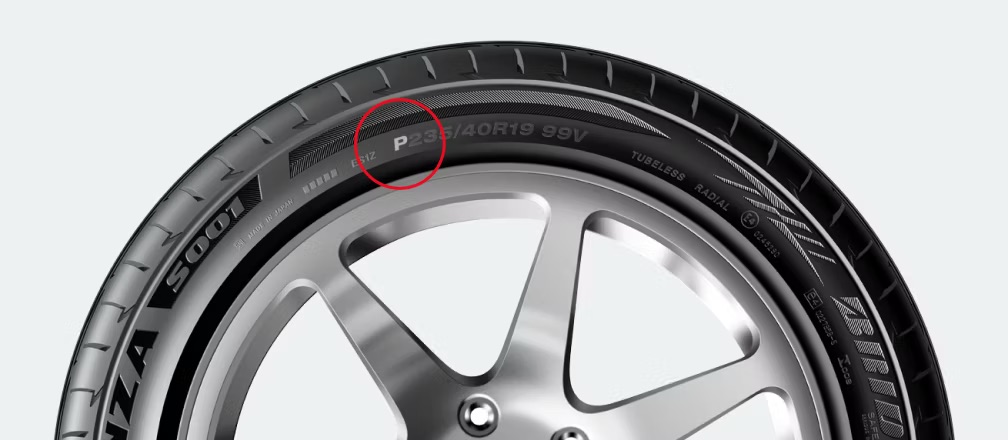
P
If your tire size begins with a “P”, it means it is a Passenger car tire in P-metric sizes. Those without the “P” are “European” metric sizes, which may have different load ratings or speed ratings.
Selecting Tires for Your Toyota
Different Toyota’s have different needs. Let us help you select the right tires for your Toyota.
Summer
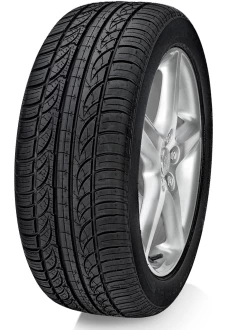
Advantage Ultimate grip and handling, with best wet/dry compromise
Disadvantage Not designed for cold weather – not a Winter Tire
Temperature Performs well in temperatures above 15°C
Weather Warm, dry, wet
All Weather
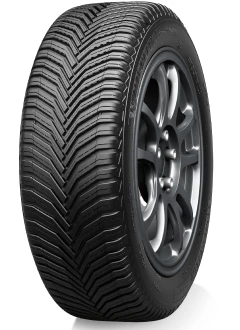
Advantage Great traction and performance across wide range of conditions
Disadvantage Reduced performance in harsh winter conditions. Increased wear in warmer conditions
Weather All weather conditions
Temperature Performs well in temperatures above -10°C
All Season
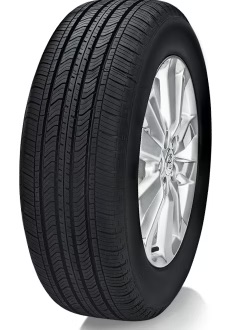
Advantage Great all-round tire performance
Disadvantage Reduced performance below 7°C
Weather All weather conditions
Temperature Performs well in temperatures above 7°C
Winter
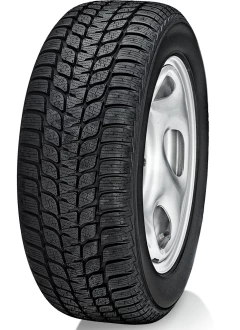
Advantage Shortest stopping distance in winter. Superior handling on wet, icy or snowy roads
Disadvantage Increased tire wear. Reduced performance above 10°C
Weather All cold weather conditions
Temperature Performs well in temperatures below 7°C
We have an extensive selection of new and used tires at competitive prices, as well as a price match promise.